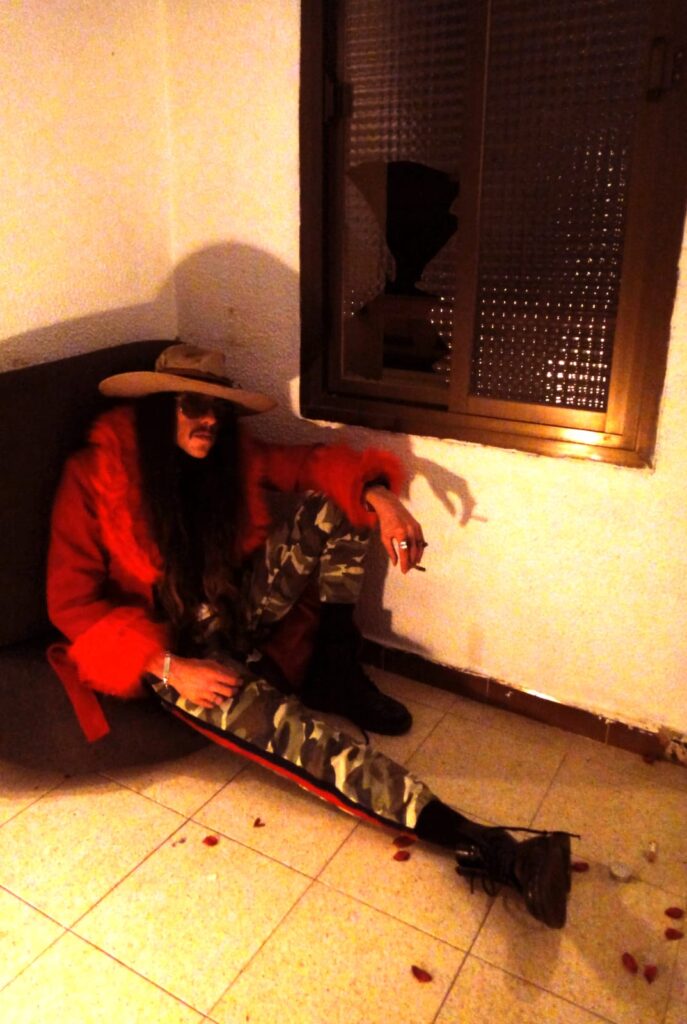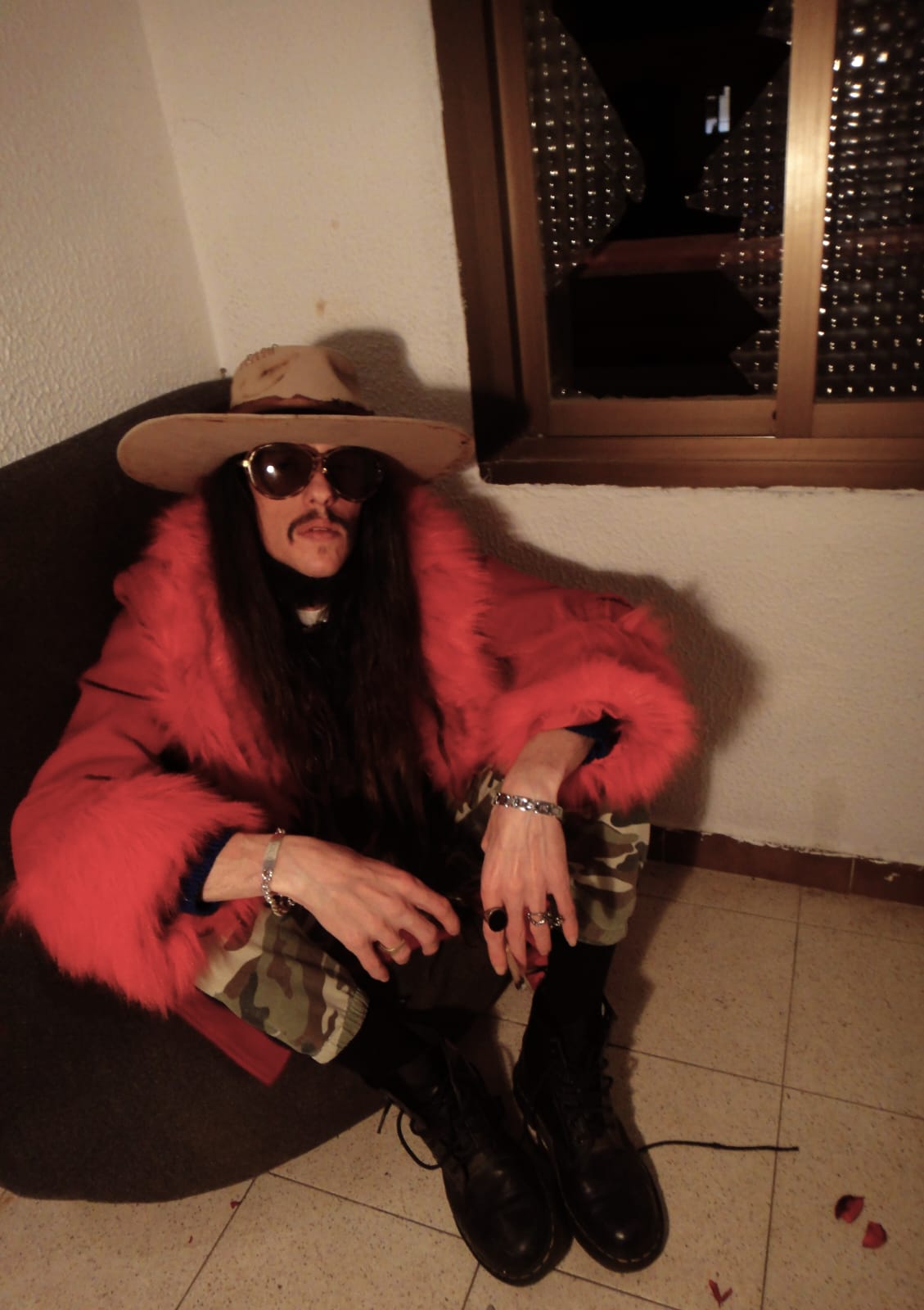
We have the pleasure of meeting and speaking with Msb Mario El Niño de la Pili—the Barcelona-based spoken-word disruptor behind the cult EP Esto No Es Para Usted inside one of the most chaotic rooms of his apartment, a graffiti-covered hideout that feels less like a home studio and more like the backstage of a myth. A recording mic stood in the center, surrounded by half-burned candles, scattered wine bottles, and an assortment of “late-night survival tools” that only fuel the online rumors about his nocturnal lifestyle. Mario arrived straight from what he called “an extended night out,” wrapped in a huge red faux-fur coat and an oversized hat paired with sunglasses so large they nearly erased his face.
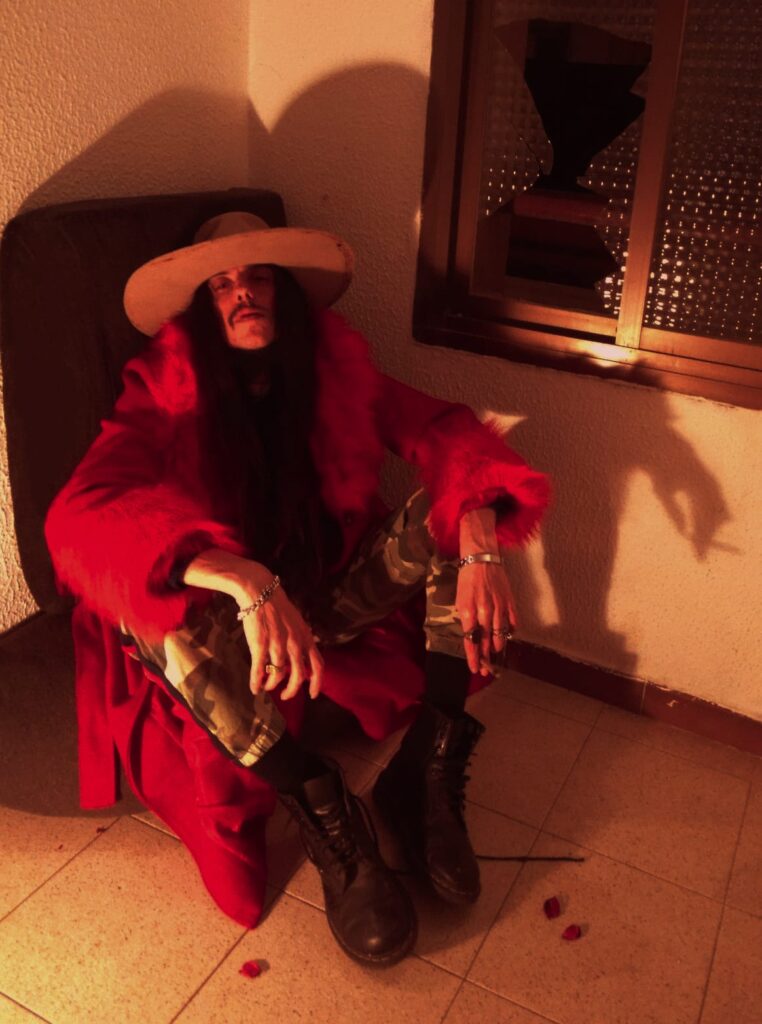
Throughout the conversation, his voice wavered at moments, as if the past hours—or possibly days—were still catching up with him, yet the charisma never flickered. The man who fused reggaetón with Spanish cultural iconography and transformed Spoken Word into a volatile hybrid of club music and street poetry sat before us with a presence that felt engineered for intrigue. And maybe that’s why it was impossible not to ignore the way he kept smoking, almost absentmindedly, while taking measured sips from a small bag filled with a pinkish substance. When talking to him, his voice breaks occasionally, as if his body were in another world after too many hours awake, but his charisma remains intact. El Niño de la Pili asks us if we can start the interview now, and we can only say that Mario exists somewhere between brilliance and chaos, and today he has allowed us to enter that space directly —walls screaming with color, the air thick with creative residue—you begin to understand why.
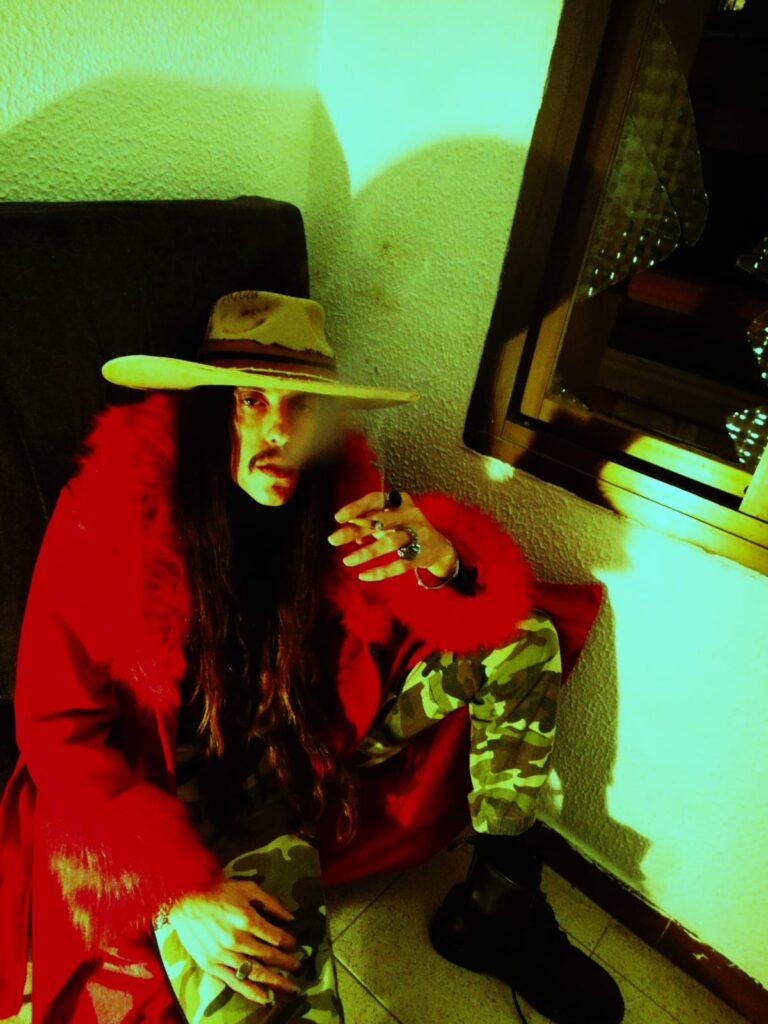
Thank you Mario for taking the time to speak with us—it’s a pleasure to be here in Barcelona. With your permission, let’s begin the interview:
How are you feeling? You had been away from social media for a while and disappeared.
Twisted ass fck love; and I don’t know, I was having sx. But they didn’t do it right and I needed to have more. Then I was watching the film ‘Pocahontas’.
Your EP Esto no es para usted was removed from Spotify just a week ago. Was that a strategic marketing move, or was there a real conflict behind the scenes that no one is talking about?
It was a brown conflict and white marketing.
The world discovered you this year through a fusion of genres that feels both chaotic and brilliant. How did that blend emerge—the one so many describe as “the mental map of a beautifully disordered mind”?
You're wrong; the world discovered me when it read the Bible.Some fans say that removing the EP only made it more “cursed,” and therefore more desirable. Are you consciously playing with the audience?
Yes, I’m playing 4-3-3 but alternating with 3-4-3, depending on how the woman I have in bed looks, if she’s like yours, I use 6-0-9.
Your work is loaded with heavy emotions. What parts of your personal life inevitably seep into your music?
My d*ck. That’s a shitty question. Depression in person making music to dance what a heavy emotion, ei? C’mon, it has merit but I don’t give a shit, besides, people aren’t capable of understanding emotions in music, they just get stuck on the simple lyrics. Random words. I didn’t invent this stupid world. Fuetaso, love it. I’m the best writer from 5 years ago now. A book in Spanglish, before Allah was trying to do it. Shakalakalaka.
There’s a lot of talk about your nightlife and the extreme atmosphere that seems to orbit around you. How much truth is there behind the rumors of excess and loss of control?
Well, I don’t know, I also take drugs in the mornings.
Have you ever felt your lifestyle put your career—or even your health—at risk?
I try to kill myself every three days with pills, but it doesn’t work out and I wake up, put on my hat and go back to fuck.
When you think of your younger self, what would you tell him about fame, excess, and creativity?
Nothing, my younger self is your mother.
On social media people say, “El Niño de la Pili lives the way he creates: with no filters.” Do you recognize yourself in that description?
Is that what they say on social media? Well, I recognise myself in the description of Jesus Christ.
You’ve trended several times because of your wild, impossible outfits. What role does fashion play in your identity as both an artist and a model?
Nothing, I look incredible because everything fits me well. I wear women’s clothes and they fit me better than they fit your wife. What should I do? But I prefer to be naked really.
Your style mixes street luxury, nostalgia, and chaos. Who are you really dressing for: the industry, your fans, or yourself?
For your mother. Without a doubt.
Many fashion photographers say you’re “untamable” in front of the camera. Do you think your rebellious streak is part of your brand, or simply the way you exist?
I don’t know, it’s just that you ask shitty questions. You’re gorgeous, but you’re awful at asking questions. I really hate cameras.
Some claim you’re the only artist who could deliver spoken word over a mash of techno, flamenco, and reggaetón—and make it work. What drives you to break every rule?
That’s true, it’s the only good thing you’ve said in 10 minutes. But you forgot to mention that I’m the only one who can do all that without too much effort or interest, while you’re sitting on top of me bouncing to the beat of the kick.
What has been the darkest moment in your artistic path, and how did you manage to turn it into something creative?
Talk to you for sure. And stop climbing Nevado del Rey.
Your nightlife seems like an extension of your performance. Where does the persona end and the person begin?
Do you want to come party with me? Just asking me that is getting on my nerves; I’m an early riser.
Have you ever felt that fame was using you rather than the other way around?
No, because I don’t know what is fame.
You’ve been seen alongside influential designers. Is there a major collaboration you can’t reveal yet—but that we should be expecting?
It’s a few one coming soon. But I can’t say anything yet.
Your lyrics speak of identity, rage, and tenderness at the same time. Do you see yourself more as a poet, a performer, or a survivor?
I see myself more as a prostitute of letters. A poet of the underworld and a performer of South American puss*es.
Many people say you’re inaugurating a new genre. If your style were a new musical religion, what would be its main commandment?
Kneel down and pray in the brown dialect.
To close: will Esto no es para usted return to Spotify, or will you leave it as a digital myth—fuel for your growing legend?
I’ll leave it at your mother’s place.