

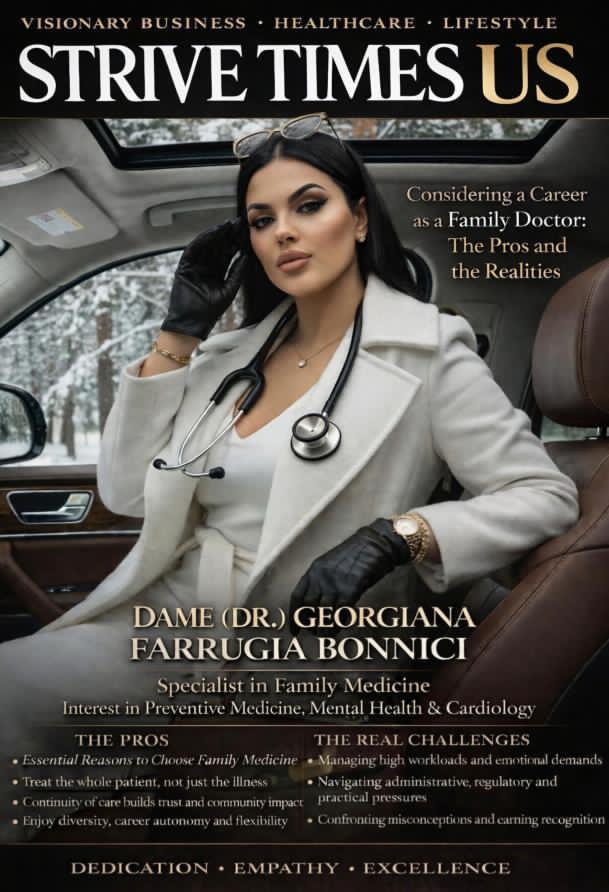
By Dame (Dr.) Georgiana Farrugia Bonnici
Choosing a medical career is one of the most significant decisions a person can make. For students and young doctors exploring their future, Family Medicine offers a path that is intellectually stimulating, socially impactful, and deeply human.
However, becoming a family doctor is not simply about choosing a specialty—it is about choosing continuity, community, and long-term patient relationships. To make an informed decision, it is essential to understand both the advantages and the realities of working in primary care.
What Is Family Medicine?
Family Medicine is a medical specialty focused on comprehensive, continuous healthcare for individuals and families across all ages, genders, and diseases. Unlike hospital-based specialties that concentrate on specific organs or systems, family doctors treat the whole person—physically, psychologically, and socially.
Family physicians often serve as the first point of contact within the healthcare system, managing acute illness, chronic disease, preventive care, and mental health support.
The Advantages of Choosing a Career as a Family Doctor
1. Holistic, Patient-Centered Care
One of the most rewarding aspects of Family Medicine is the ability to treat patients beyond their symptoms. A family doctor considers lifestyle, family dynamics, emotional wellbeing, and social context.
This holistic approach makes the work intellectually rich and personally meaningful.
2. Continuity of Care Across a Lifetime
Family doctors often follow patients from childhood through adulthood and into old age. They support families during pregnancy, manage chronic diseases, provide mental health care, and guide patients through serious diagnoses.
This long-term relationship builds trust—one of the most valuable aspects of the profession.
3. Variety and Clinical Diversity
No two days in Family Medicine are the same. Consultations may include:
- Acute infections
- Chronic disease management
- Mental health conditions
- Preventive screening
- Lifestyle counselling
- Minor procedures
For doctors who enjoy breadth rather than narrow specialization, Family Medicine offers unmatched diversity.

4. Career Flexibility and Autonomy
Family doctors can work in:
- Private practice
- Public healthcare systems
- Urgent care centers
- Academic teaching
- Research
- Healthcare leadership
- Humanitarian missions
Many family physicians also benefit from greater control over their schedules compared to hospital-based specialties, allowing better work-life balance.
5. Community-Level Impact
Strong primary care systems are associated with reduced hospital admissions, improved health outcomes, and greater health equity.
As a family doctor, your work strengthens the entire healthcare system—not just individual patient outcomes.
The Real Challenges of Family Medicine
While Family Medicine is deeply rewarding, it also presents genuine challenges.
1. Heavy Workload and Emotional Responsibility
Family doctors often manage high patient volumes and complex medical and psychosocial cases. Emotional resilience is essential, as burnout is a real risk without proper boundaries and system support.
2. The Expectation to “Know Everything”
Patients rely on family doctors as their primary medical resource. This requires continuous learning, adaptability, and comfort with clinical uncertainty.
3. Administrative and Regulatory Demands
Documentation, compliance requirements, and healthcare bureaucracy can consume significant time. Managing these pressures efficiently is a critical skill.
4. Misconceptions About the Specialty
Family Medicine is sometimes misunderstood as less specialized. In reality, it demands broad medical knowledge, strong decision-making skills, advanced communication abilities, and the capacity to manage complexity across multiple systems.
Is Family Medicine the Right Career for You?
Family Medicine is not the easiest path—but it is one of the most meaningful. It requires:
- Resilience
- Empathy
- Lifelong learning
- Strong communication skills
- Comfort with complexity
For doctors who value long-term relationships over prestige, continuity over episodic care, and impact over recognition, it offers extraordinary professional satisfaction.
Choosing a career in Family Medicine means choosing to stand at the heart of healthcare. It is a specialty built on trust, continuity, prevention, and community service.
If you are considering becoming a family doctor, approach the decision with open eyes—and with pride. The rewards, though sometimes quiet, are profound and lasting.