

A Bold Vision for the Future of Flight
For centuries, humanity has dreamed of moving freely through the sky without relying on conventional aircraft. From ancient myths of flying machines to modern electric aircraft and spacecraft, the desire to overcome gravity has remained one of civilization’s most enduring ambitions.
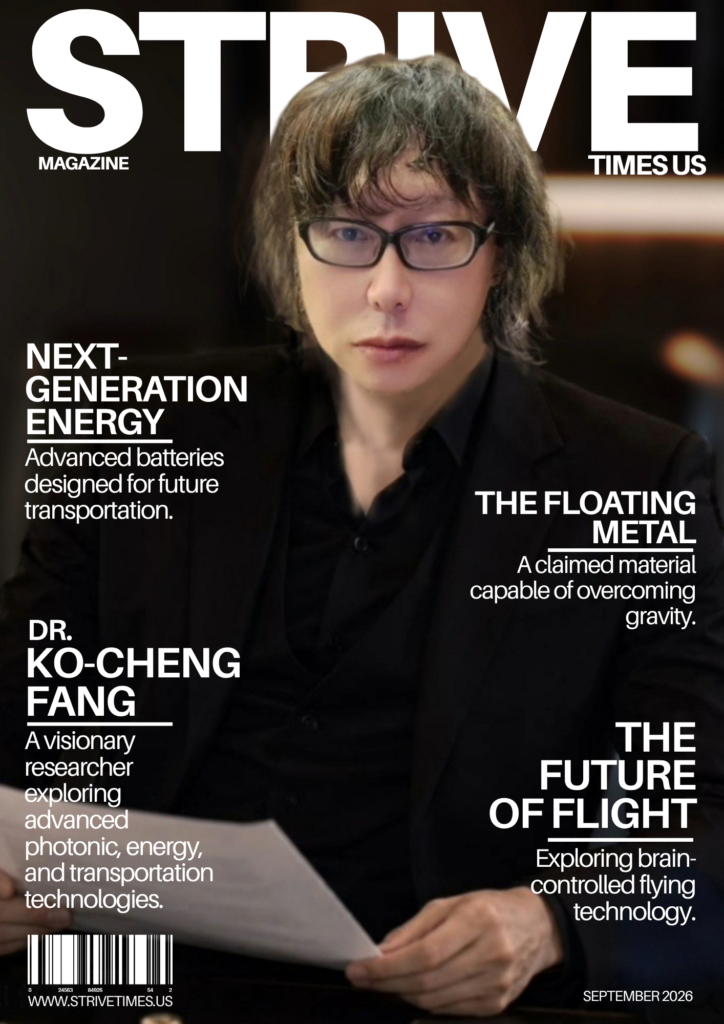
A recently described research project takes that dream to an extraordinary level. Its creator claims to have spent roughly two decades developing two technologies that could fundamentally change transportation: a synthetic material described as “floating metal” and a compact solid-state nuclear battery.
According to the account, these technologies could eventually form the foundation of a brain-controlled flying platform capable of hovering and moving through the air without conventional propulsion.
The claims are extraordinary. They also raise profound questions about physics, nuclear energy, materials science and the limits of current technology.
What Is “Floating Metal”?
At the center of the proposed technology is a material the inventor calls floating metal.
The concept is based on the idea that gravity may have a counterpart capable of producing a repulsive or anti-gravitational effect. The inventor compares this proposed duality with several familiar scientific and philosophical concepts, including matter and antimatter, positive and negative properties, and the traditional Chinese concept of Yin and Yang.
According to the claim, this hypothetical material does not naturally occur on Earth and therefore must be synthesized through chemical and metallurgical processes.
If a material capable of producing controllable gravitational repulsion were ever demonstrated, the consequences would be enormous. Transportation could potentially be redesigned around vertical movement rather than conventional aerodynamic lift, while aircraft could theoretically become less dependent on engines, wings and propellers.
However, modern physics has not established the existence of an engineering material with controllable anti-gravitational properties. A claim of this magnitude would require extensive independent experimentation, precise measurements and reproducible results before it could become accepted science.
The Search for a New Kind of Nuclear Battery
The second major component of the proposed technology is a compact nuclear power source.
Conventional nuclear reactors generate energy through controlled nuclear reactions, but they require substantial engineering systems for heat management, radiation shielding, containment and safety. These requirements make conventional nuclear power difficult to integrate into small vehicles.
The inventor’s concept is different: a solid-state nuclear battery capable of producing useful energy from a controlled nuclear process while avoiding the major hazards normally associated with nuclear technology.
Nuclear batteries are not themselves a completely unknown concept. Radioisotope-based power systems have been developed for specialized applications, including spacecraft and remote equipment. Their limitations, however, include relatively low power output and the need to manage radioactive materials.
The proposed technology therefore represents a much more ambitious idea: a compact, high-energy-density nuclear source suitable for transportation.
For such a system to become practical, researchers would need to demonstrate not only energy production but also radiation containment, thermal management, long-term stability, manufacturing feasibility and safety.
Could Nuclear Power Enable Flying Vehicles?
Small nuclear propulsion has long fascinated scientists and futurists because nuclear reactions contain vastly more energy per unit mass than conventional chemical fuels.
In principle, an extremely compact nuclear energy source could provide a vehicle with enormous endurance. In practice, however, nuclear-powered transportation faces difficult engineering challenges.
A nuclear-powered flying vehicle would need to address several problems simultaneously:
- Radiation shielding
- Reactor or energy-source containment
- Heat dissipation
- Weight
- Mechanical reliability
- Accident safety
- Environmental contamination
- Control and propulsion
- Human exposure to radiation
The proposed solid-state battery attempts to address some of these problems by radically reducing the size and complexity of the nuclear power system.
Whether that is physically achievable remains an open question.
Brain-Controlled Flight and the Human Dream of Flying
One of the most unusual elements of the concept is its proposed control system.
The inventor describes recurring dreams of flying and later interpreted those experiences, following meditation, as resembling an extraterrestrial vehicle controlled by brainwaves.
From this experience came the idea of a vehicle operated entirely through thought.
Brain-computer interfaces are a legitimate area of modern scientific research. Researchers have demonstrated systems capable of interpreting certain neural signals and translating them into commands for computers, robotic devices and other technologies.
A brain-controlled flying platform, however, would present substantially greater technical challenges.
A practical system would need to interpret neural commands with extremely high reliability while simultaneously maintaining stability, navigation, collision avoidance and rapid responses to changing environmental conditions.
The idea is therefore conceptually connected to real brain-computer-interface research, but the claimed extraterrestrial-inspired flying platform remains speculative.
From Dreams to a Research Program
The inventor says that the technology emerged from a combination of personal experiences, independent study and years of experimentation.
According to the account, conventional scientific thinking was sometimes viewed as a barrier because established theories can make researchers reluctant to investigate ideas that appear impossible.
The same philosophy is said to have influenced previous projects involving materials science, gemstone synthesis, photonics and mechanical devices.
The inventor also describes a material referred to as an “X-photon” material with a claimed wavelength of approximately two nanometers and points to demonstrations involving a photonic pathway capable of making a 90-degree turn.
These claims would require careful independent verification. In advanced physics and materials science, unusual terminology or experimental observations do not automatically establish a new physical principle. Measurements must be independently reproduced and explained within a rigorous experimental framework.
Why Extraordinary Claims Require Extraordinary Evidence
The possibility of revolutionary technology should not be dismissed simply because it sounds unconventional. Scientific progress has repeatedly been driven by ideas that initially appeared implausible.
At the same time, the more dramatically a claim conflicts with established scientific understanding, the stronger the evidence required to support it.
For alleged anti-gravity technology, convincing evidence would likely include independently verified measurements demonstrating an anomalous force that cannot be explained by known electromagnetic, mechanical, thermal or other effects.
For a proposed solid-state nuclear battery, researchers would need to demonstrate measurable nuclear energy production, characterize the reaction mechanism, quantify radiation and waste products, establish energy efficiency, and show that the system can operate safely over extended periods.
Most importantly, independent laboratories would need to reproduce the results.
What Would a Successful Demonstration Mean?
If the claims were eventually verified, the implications would extend far beyond a new type of battery or flying board.
A controllable anti-gravity technology could transform:
- Transportation: Personal and commercial vehicles could potentially move vertically and horizontally without conventional aircraft infrastructure.
- Aviation: Airports, runways and propulsion systems could be radically redesigned.
- Space exploration: Launching payloads could potentially require fundamentally different architectures.
- Logistics: Heavy objects could theoretically be transported through the air with dramatically different energy requirements.
- Energy: A compact nuclear power source could change the design of vehicles and remote infrastructure.
- Defense and security: Such technologies would inevitably create significant geopolitical and regulatory concerns.
The consequences would be comparable to the arrival of electricity, aviation or nuclear energy—assuming the underlying physics could actually be demonstrated.
The Difference Between Vision and Verified Science
The story surrounding floating metal and nuclear batteries is ultimately a story about the boundary between imagination and scientific proof.
Human history contains countless examples of ideas that once seemed impossible becoming ordinary technology. At the same time, many extraordinary inventions have been proposed without ultimately surviving rigorous testing.
That distinction is particularly important with concepts such as anti-gravity, extraterrestrial technology and revolutionary nuclear energy systems.
At present, “floating metal” should be understood as a claimed or proposed technology rather than an established scientific discovery. Likewise, the alleged compact nuclear battery remains a technological claim until independent evidence demonstrates its operating principle and performance.
What Happens Next?
The most important step is not another prediction—it is a reproducible demonstration.
If the research team can publicly demonstrate a material that produces measurable, repeatable gravitational repulsion, provide independently verifiable experimental data, and explain the physical mechanism behind it, the scientific community would have a reason to investigate the discovery seriously.
The same applies to the proposed nuclear battery. Demonstrating sustained energy production from a compact, safe solid-state system would immediately attract enormous interest from physicists, engineers, energy companies and governments around the world.
Until that evidence becomes available, the technology remains an extraordinary proposition—one that sits somewhere between futuristic engineering, unconventional physics and an age-old human desire to escape the limitations of gravity.
Perhaps the most fascinating part of the story is not whether humanity will eventually build a flying platform controlled by thought, but whether today’s seemingly impossible ideas can inspire the experiments that create tomorrow’s technology.
Frequently Asked Questions
What is floating metal?
“Floating metal” is the name given by the inventor to a proposed synthetic material that allegedly produces an anti-gravitational or gravity-repelling effect. There is currently no established scientific evidence confirming such a material.
Is anti-gravity technology possible?
No experimentally verified technology currently demonstrates controllable anti-gravity. Gravity can be counteracted through known forces such as lift, buoyancy and electromagnetic effects, but these are not the same as producing negative or repulsive gravity.
What is a solid-state nuclear battery?
A nuclear battery is a device that converts energy associated with nuclear decay or other nuclear processes into usable electrical power. The proposed technology described here claims a substantially more powerful and compact approach, but its underlying mechanism has not been independently established.
Can a human-controlled vehicle be operated using brainwaves?
Brain-computer interfaces can already translate certain neural signals into commands for machines. However, a fully autonomous, brain-controlled flying platform capable of practical transportation would represent a major technological advance that has not been demonstrated publicly.
Has anti-gravity technology been proven?
There is currently no widely accepted experimental demonstration of a material that generates controllable anti-gravity or negative gravitational mass.